
 By businessnewstips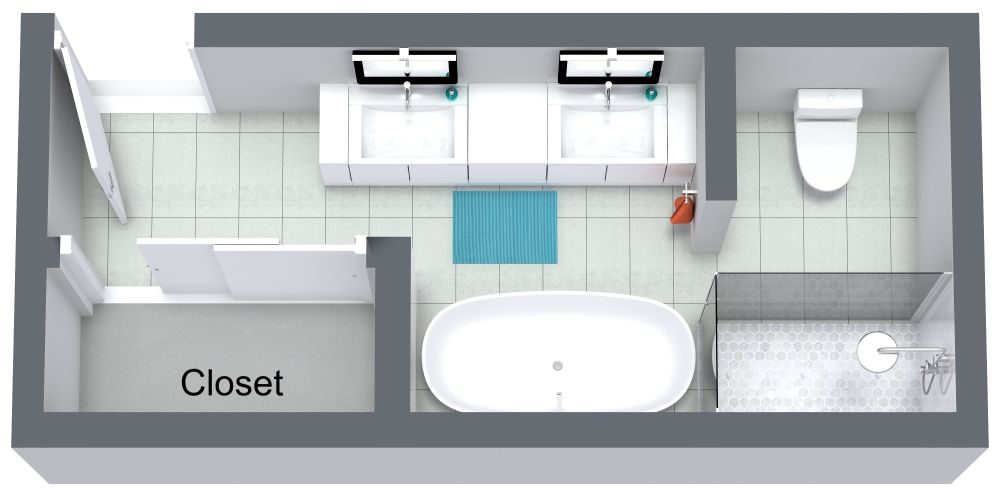
Small bathrooms get cramped fast. A toilet that blocks the door, a vanity that juts into the walkway, or a shower that sprays water where it should not can make the room feel more like a corridor than a place to get ready. The good news is that “bigger” often comes from better flow, not extra square metres.
That is why layout is usually the highest-impact decision in a bathroom renovation. Before choosing tiles or tapware, it helps to get the fundamentals right: how you enter, where you stand, and what you need to reach every day.
Start with clearances and movement, not fixtures
A tight bathroom works when you can move through it without awkward sidesteps. Begin by mapping the “walking line” from the door to the vanity, toilet, and shower. If that route narrows at any point, the room will feel smaller than it is.
A few practical principles make a difference:
- Keep the centre as open as possible. Aim to push bulk to the edges so the middle reads as one continuous space.
- Avoid placing obstacles in front of key zones. The area in front of the vanity and toilet should feel usable, not squeezed by a towel rail or cabinet corner.
- Respect the door zone. If the door swing conflicts with the toilet or vanity, the room will always feel awkward. That one clash can make the whole layout feel “wrong,” even when everything technically fits.
If you are reworking a layout, prioritise changes that remove pinch points. Even small shifts, like moving a vanity a few centimetres or choosing a slimmer profile, can restore flow.
Rethink the door and shower, because they control the space
In many small bathrooms, the door and the shower are the biggest space eaters. Changing how they open or how they visually “read” can make the room feel instantly calmer.
Door ideas that often help:
- Swap to a cavity slider if the wall structure allows. This removes the swing arc and frees up usable space.
- Reverse the swing so it opens outwards, if practical and safe in your home’s circulation areas.
- Use a narrow-profile handle so nothing catches when you pass by.
Shower choices that create breathing room:
- Go frameless or semi-frameless where possible. Heavy frames add visual clutter and make a small room feel segmented.
- Use a fixed panel instead of a hinged door if the layout allows. Hinges need clearance, and that clearance is often the “missing” space you feel.
- Consider a larger shower zone with a simpler screen rather than a tiny cubicle with thick frames. A more open shower area can read as more space, even with the same floor area.
If you are deciding between a shower over bath and a walk-in shower, the key question is how your household actually uses the room. The best layout is the one that fits your daily routine.
Storage that disappears beats storage that bulks up
Clutter is the enemy of spaciousness. You can have a well-designed small bathroom, but if every surface becomes a storage shelf, the room will feel tight again.
Smart storage strategies focus on “invisible” capacity:
- Wall-hung vanities keep the floor visible, which makes the room feel larger and easier to clean.
- Recessed niches in showers and above vanities store essentials without pushing into the space.
- Mirrored cabinets add storage while doing a job you already need the mirror to do.
- Full-height, slimline cupboards can hold a surprising amount without stealing elbow room, especially when tucked into a corner.
A useful rule is to reduce the number of items that must live on the vanity top. If your daily essentials have a home behind a door, the room looks bigger and calmer.
Use lighting and sightlines to “stretch” the room visually
Lighting and visual continuity can make the same footprint feel more open. Small bathrooms often suffer from one harsh ceiling light that creates shadows and highlights clutter.
Aim for layered lighting:
- Ambient light for overall brightness.
- Task light around the mirror so faces are evenly lit.
- Accent light to soften edges, such as subtle lighting near a niche or vanity kickboard.
Sightlines matter too. The more your eye can travel without interruption, the larger the room feels. Clear glass, fewer visual breaks, and consistent finishes help. Even small choices, like aligning tile lines or keeping hardware finishes consistent, can reduce visual noise.
If you want a quick “swap” that often pays off, upgrade the mirror. A larger mirror reflects more light and extends the perceived width of the room, especially when paired with balanced lighting.