
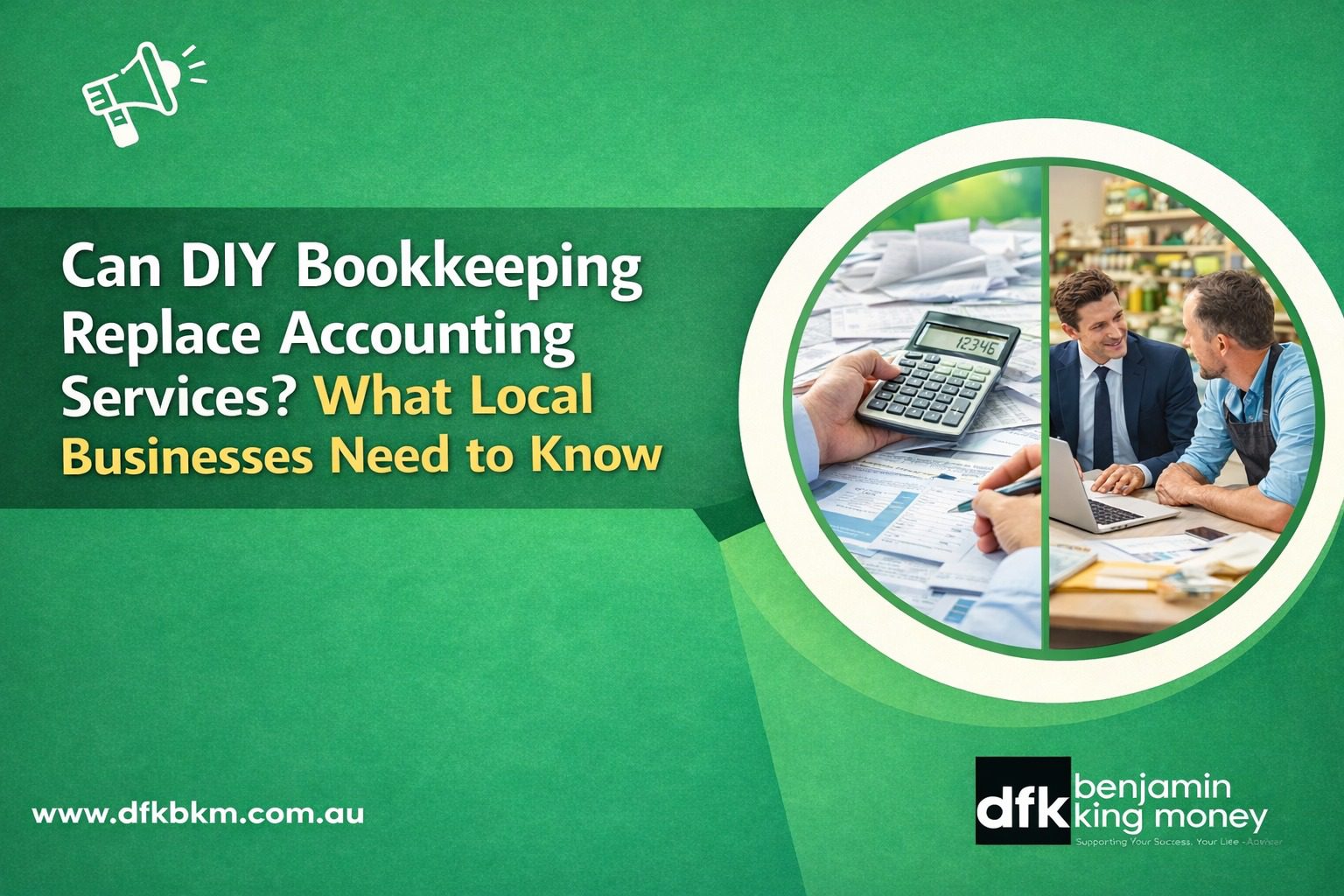
Being a business owner means that one has to be many things, but one thing that causes a lot of stress for many people is finances. It is a well-known fact that finances are a heavy burden to bear, especially for a business that is still growing. Because of this, many business owners find themselves wondering about one very important question: can one do their own bookkeeping or should they hire a professional to do it for them?
What DIY Bookkeeping Actually Covers
At its core, bookkeeping is the day-to-day recording of financial transactions. It includes tasks like:
- Recording sales and purchases
- Categorising expenses
- Reconciling bank statements
- Tracking payroll outflows
Bookkeeping software such as Xero, QuickBooks, or MYOB can assist with these tasks. Most entrepreneurs believe that if they can master a software program, they can manage their own financial records without any assistance. This is not entirely true.
The Role of Accounting Services
Accounting services go beyond bookkeeping. Professionals like those at DFK BKM bring years of training and experience to your business finances. They provide:
- Financial reporting and interpretation
- Planning for tax obligations (BAS, GST, PAYG, etc.)
- Budgeting, cash flow forecasting, and analysis
- Business advisory and strategic financial planning
- Compliance with local and national tax laws
A qualified accountant will review the books, ensure accuracy, and interpret the numbers to assist you in informed decision-making. This is a wider range of functions than bookkeeping.
Why DIY Bookkeeping Isn’t Enough on Its Own
1. Errors Can Be Costly
If you handle your own bookkeeping, minor inaccuracies may cause you to underpay your taxes, miss out on tax deductions, and receive incorrect financial reports. Since you are not professionally trained, these inaccuracies may not be noticed, which could be costly.
2. Time Drain for Business Owners
Your own bookkeeping requires your time, which could be spent on other parts of your business, such as developing relationships with your customers, making your products, and thinking strategically about how to grow your business. Most business owners quickly realize this and want to focus on running their business, not their bookkeeping.
3. Limited Strategic Insight
Bookkeeping will tell you what happened, but accounting will tell you what it means. Accounting will give you insight into your financial reports, your profit sources, and how you can make your business better, which bookkeeping will never be able to do.
4. Compliance and Risk
Tax laws and compliance requirements are constantly changing. With BAS, GST, payroll, and other obligations to fulfill, having expert support can minimize risks to your business and protect it from any fines and penalties.
Where DIY Bookkeeping Fits Well
DIY bookkeeping can be suitable for very small businesses, such as sole traders or freelancers who don’t have a lot of transactions. The best use cases for DIY bookkeeping include:
- Your business has simple financial data
- You have limited expenses to account for
- You want to get a general idea of cash flow
In such situations, bookkeeping software can be useful in keeping your business organized and saving data entry costs. But as your business grows, bookkeeping alone becomes less effective without professional interpretation.
Why Local Accounting Services Matter
A search engine query for “accounting services near me” will yield a multitude of options. Although location is useful for personal meetings, it is not as significant as finding a company that is familiar with your industry.
Local businesses receive personalized service and expertise from DFK BKM. For over six decades now, the team has been assisting Australian businesses with:
- Tailored accounting services that are built for strategic success
- Interpretation of financial data
- Tax planning
- Budgeting assistance
- Advisory assistance that is integrated with business objectives
This is done through the firm’s comprehensive understanding of business, coupled with advice that is informed by the realities of business as well as financial principles.
The True Cost Comparison
DIY Bookkeeping
Pros:
– Lower cost
– Can help track finances
– Simple to set up with modern software
Cons:
– No strategic input
– Can cause non-compliance issues
– Time-consuming for owner
Professional Accounting Services
Pros:
– Accurate and compliant financial reports
– Forward-thinking financial planning
– Strategic input for the business
– Time-saving for core business activities
Cons:
- More costly than doing it yourself
- Involves choosing the right provider
For most businesses, the investment in accounting services proves to be worthwhile.
Making the Right Choice for Your Business
Can your business get by without bookkeeping services? The answer is no when your business is complex, growing, or needs to comply with regulations. Bookkeeping alone can keep records neat. But true financial management and strategic planning require experienced accounting services.
For a business that is just starting out, book keeping tools might be a good starting point, but as the business grows, relying on trusted accounting services near me will bring order and clarity to the business finances.
The key to keeping the business compliant, informed, and moving towards growth is investing in the right combination of book keeping and accounting services.
FAQs:
1. What is meant by DIY bookkeeping?
DIY bookkeeping is an instance when the owner of the business takes charge of his own books through the use of bookkeeping software. This involves the recording of income and expenditure and balancing the books without the aid of any professional advice from bookkeeping services.
2. What are the risks of relying solely on DIY bookkeeping?
The risks associated with relying solely on bookkeeping are numerous, and this is due to the fact that without any guidance from accounting services, the financial records may be incorrect, leading to poor decision-making, cash flow problems, and an inability to understand the financial position of the business.
3. How do accounting services add value to the business compared to bookkeeping?
Accounting services do not just add value to the business; they interpret the financial records and provide guidance to the business, ensuring it is tax compliant and assisting it in planning and forecasting, as well as ensuring it is profitable and successful through accurate financial information and decision-making.