
 By businessnewstips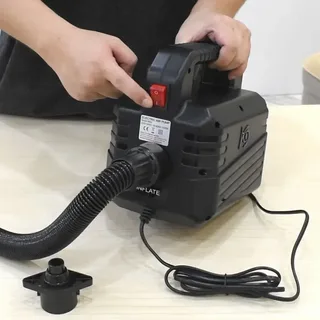
An air track only performs as well as the air pressure inside it. Too soft and landings feel sluggish. Too firm and impact increases and skills feel unpredictable. The pump you choose affects how quickly you can set up, how consistent the bounce feels across sessions, and how smoothly you can pack down.
When people compare pump options for training inflatables, they often start by looking at a typical electric air pump listing to see what specs and accessories are commonly included.
Start with airflow, not just watts
Wattage (like 600W, 800W, or 1200W) tells you something about the motor, but it does not always translate cleanly to real-world inflation speed. The more useful spec is airflow, usually listed in litres per minute or cubic metres per hour. Higher airflow generally means faster inflation, which matters most for longer tracks or club setups where multiple inflatables are used back-to-back.
If airflow is not clearly listed, use wattage as a rough proxy, but keep in mind two pumps with similar watt ratings can feel different in practice. Motor efficiency, housing design, and hose diameter all affect how quickly air actually moves into the track.
A practical way to think about it:
- Small home setups can often do fine with moderate airflow if you inflate once and leave it up for a session.
- Clubs, coaches, and frequent pack-down routines benefit from higher airflow to reduce set-up time and frustration.
Check nozzle and valve compatibility first
Nozzle fit is one of the most common avoidable problems. Air tracks use specific valve styles, and even small mismatches can lead to annoying leakage during inflation or a nozzle that pops out under pressure.
Before choosing a pump, make sure you can answer:
- Does the pump include multiple nozzle sizes or adapters?
- Does the nozzle seat firmly into your track’s valve without needing extra tape or improvised fixes?
- Is there a secure connection point for the hose so it will not loosen while running?
A good fit is not just convenient. It reduces strain on the valve, helps you reach consistent pressure, and prevents the “half-inflated but fighting the nozzle” experience that wastes time.
Look for deflation and control features that make sessions easier
For many owners, deflation is where the “right pump” becomes obvious. A pump that supports deflation can reduce pack-down time and make storage easier, especially if the track needs to fit back into a tight bag.
Other control details worth paying attention to:
- A stable on/off switch you can operate quickly
- A hose length that lets you place the pump safely without stretching cords across the training area
- A nozzle system that can be swapped without tools
Some setups also benefit from a simple method to make small pressure adjustments. Even without a built-in pressure gauge, the ability to add or remove a bit of air efficiently helps you dial in the feel for different athletes and drills.
Consider run time, heat management, and noise
Air tracks are often inflated in a short burst, but some situations require longer run times, such as filling multiple mats or topping up throughout the day. Pumps can heat up, and overheating tends to shorten lifespan and lead to inconsistent performance.
When assessing run time and durability, look for:
- Ventilation that keeps the motor cool
- A stable base that prevents the pump from tipping during use
- Clear guidance on continuous operation limits if provided
Noise matters more than people expect, especially for home use or classes in shared spaces. A louder pump is not automatically a deal-breaker, but think about where you’ll use it. If you train early mornings, run sessions in a community hall, or coach in an echo-prone room, noise can affect how often you actually want to set up.
Prioritise safety and everyday practicality
Because air tracks are used around movement, tumbling, and jumping, the pump setup should be safe and predictable. The best choice is usually the one that fits smoothly into your routine without creating trip hazards or fiddly steps.
A quick pre-purchase practicality check:
- Power: Is the cord length workable, and will you need an extension lead?
- Placement: Can the pump sit out of the landing zone and away from foot traffic?
- Storage: Do the hose and nozzles store neatly so pieces do not get lost?
- Consistency: Can you reach a similar firmness each session without guesswork?
If you’re buying for multiple users, simplicity becomes a feature. A pump that is easy for a parent, coach, or athlete to operate correctly will lead to more consistent inflation, which supports safer, more repeatable training.
A simple decision checklist for your air track pump
To narrow options quickly, use this checklist:
- Airflow: High enough for your track size and how often you inflate
- Nozzles: Compatible with your valve, with secure seating
- Deflation: Available if you regularly pack down
- Heat handling: Ventilation and stable operation during repeated use
- Practicality: Cord and hose length, stability, and manageable noise
The right pump is the one that makes inflation predictable, fast enough for your routine, and easy to repeat without hassle. When that part is solved, your air track becomes something you use more often, with a feel you can rely on from session to session.