
 By businessnewstips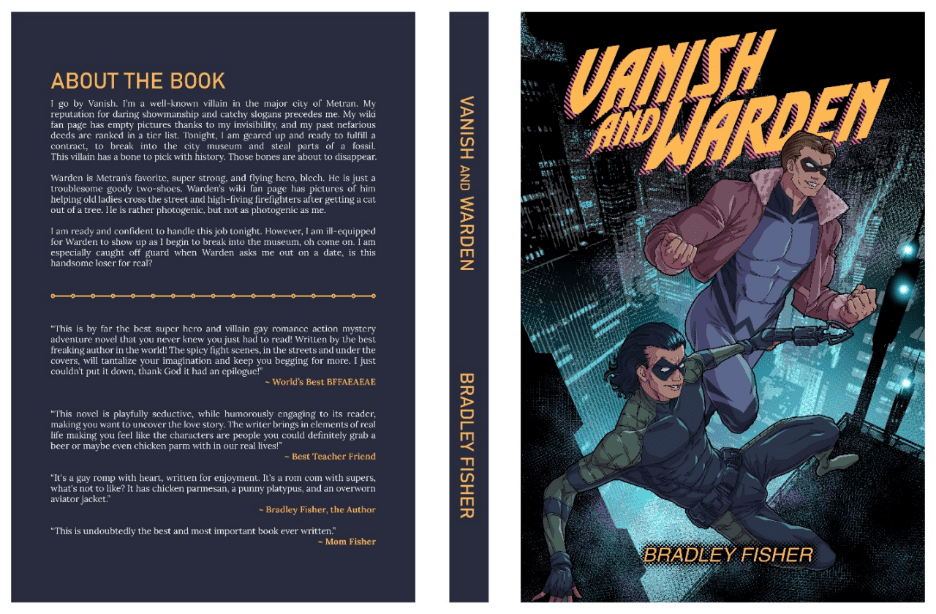
Trust isn’t shiny in Bradley Fisher’s Vanish and Warden. It’s fragile, complicated, and sometimes downright inconvenient. The story doesn’t treat it like a moral lesson. It treats it like what it really is, a slow, awkward, funny, painful climb toward honesty. Vanish can disappear in the blink of an eye, and Warden can control almost anything around him, but neither one knows how to trust easily. Fisher makes that tension funny in the most human way possible. It’s two people who could save the world, struggling to save each other from themselves.
Vanish Lies Best When He’s Scared To Be Seen
Vanish doesn’t plan to be dishonest. He just sort of… edits the truth until it sounds less risky. It’s a habit that started long before Warden showed up. Fisher writes him like someone who’s made a life out of staying one step ahead of getting hurt. He’ll crack a joke, flash a grin, maybe change the subject, anything to dodge what’s real.
It’s funny at first. Charming, even. You think he’s just being clever. But the longer you read, the more you realize every lie, every laugh, is a little plea for safety. Fisher never lets you forget that the man who can vanish on command is terrified of being seen. And when Warden starts asking the hard questions, the humor that once protected Vanish starts turning into something heavier.
Warden Believes Control Is The Same As Trust
Warden walks in thinking he knows how to handle everything, people, problems, and plans. He’s calm, methodical, the kind of guy who probably alphabetizes his emotions. Fisher plays with that image, then tears it apart piece by piece. The more Warden tries to control the situation, the more it slips through his hands.
And then there’s Vanish. Loud. Unpredictable. Impossible to plan for. You can almost feel Warden’s frustration rising with every sarcastic quip. But under that frustration? Curiosity. He wants to understand this man who never answers a question straight. Fisher makes it funny, Warden, the guy who can face chaos head-on, is completely undone by a smirk and a half-truth. Control isn’t helping him here. Connection might. And that’s what scares him most.
Their Trust Is Built On Small Accidents And Strange Moments
Fisher doesn’t make their bond neat or dramatic. It grows out of tiny, ridiculous things, a badly timed joke, a mistake during a mission, a near disaster that ends in laughter instead of anger. Trust sneaks in sideways, like sunlight through a cracked door.
There’s this quiet understanding that builds between them, the kind that can’t be explained but is felt in every near miss and shared glance. Vanish messes up constantly, but Warden doesn’t walk away. Warden hesitates, but Vanish stays anyway. Their trust doesn’t happen in speeches. It happens in the pauses. Fisher keeps it honest, even when it’s messy, which is why it feels so real.
The Moment Everything Breaks (And Why It Matters)
Every good connection has a breaking point, and Fisher doesn’t shy away from it. When the truth finally hits, when Vanish’s lies and Warden’s control clash, it’s not explosive. It’s quiet. Painful. The kind of scene where no one knows what to say, so they don’t. Vanish disappears. Warden freezes.
But here’s where Fisher’s tone shines: even in heartbreak, there’s humor. Not the kind that mocks, but the kind that makes you breathe again. Because after the silence, after the anger, Fisher lets humanity creep back in. Maybe through a single line. Maybe through the kind of joke that’s half apology, half hope. It’s messy, awkward, beautiful, like real forgiveness usually is.
When Staying Becomes The Bravest Thing They Do
The easy thing would be for both of them to leave, Vanish to vanish, Warden to rebuild his perfect order. But Fisher doesn’t let them take the easy route. They stay. It’s not a grand romantic gesture, it’s a quiet, everyday choice. A conversation that doesn’t fall apart. A joke that doesn’t sting this time.
There’s something powerful about that kind of endurance. Fisher writes staying not as a weakness, but as bravery. Vanish keeps showing up even when he’s scared. Warden keeps forgiving even when it hurts. Together, they learn that trust isn’t a promise, it’s practice. You build it, break it, and build it again.
Fisher Writes Love Like It’s Human, Not Perfect
What makes Vanish and Warden so relatable isn’t the powers or the danger. It’s the awkwardness, the humor, the slow learning curve of love. Fisher never writes a polished romance. He writes a living one. One that trips over itself, argues too much, laughs at the wrong times, and still finds a way to keep going.
By the end, trust feels earned, not given. It’s a fragile, funny, hard-won kind of peace between two people who should’ve been enemies but somehow became something else. Fisher doesn’t tie it up with a bow. He leaves it breathing, open-ended, like life.
Because that’s the real trick of Vanish and Warden: it makes you believe that love doesn’t fix you, it just gives you someone who’ll stay when you fall apart, then laugh with you while you put yourself back together.