
 By businessnewstips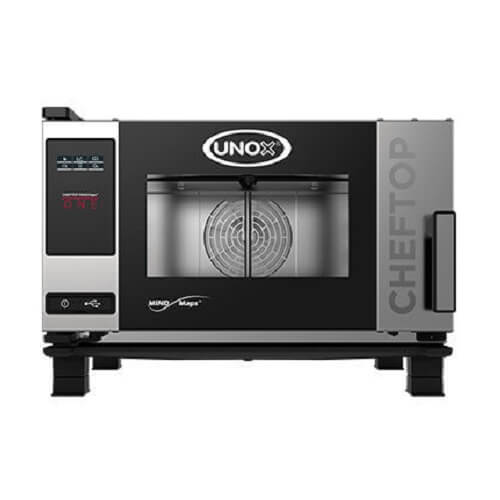
There’s a piece of equipment that’s quietly become the most transformative investment in modern commercial kitchens across Australia. It doesn’t look revolutionary. It sits in the same spot as a conventional oven. But operators who’ve made the switch consistently say it’s the single upgrade that changed how their kitchen runs.
The commercial combi oven combines convection heat and steam in a single unit — giving chefs precise control over temperature, humidity, and cooking method simultaneously. The result is faster cooking, better food quality, reduced shrinkage, and a dramatically more versatile kitchen.
Here’s a comprehensive look at why Australian restaurants are making the switch, what combi ovens actually do, and what to look for when you’re ready to invest.
1. What Is a Commercial Combi Oven?
A combi oven — short for combination oven — is a commercial cooking appliance that integrates three cooking modes in a single cabinet:
- Convection mode. Circulates hot dry air around the food, cooking evenly and quickly. Ideal for roasting, baking, and grilling.
- Steam mode. Injects steam into the cooking chamber, maintaining moisture. Used for vegetables, fish, rice, and any product where moisture retention is critical.
- Combination mode. Simultaneously uses convection heat and steam at controlled ratios. This is where the combi oven becomes truly powerful — cooking food faster than steam alone, while retaining more moisture than convection alone.
The ability to control both temperature and humidity independently — and to switch between modes or combine them — gives chefs a level of precision that no conventional oven can match.
2. The Business Case: Why Combi Ovens Make Financial Sense
For Australian restaurant operators, a combi oven is not just a culinary tool — it’s a business investment with measurable financial returns.
Reduced food cost through lower shrinkage
One of the most significant financial benefits of combi cooking is reduced product shrinkage. When proteins are cooked in combination mode — convection heat with controlled steam injection — moisture loss is dramatically lower than conventional roasting. A beef roast cooked conventionally might lose 25–35% of its weight to shrinkage. The same cut cooked in a combi oven typically loses 8–15%.
Across a week’s worth of protein, that difference compounds into significant food cost savings.
Faster throughput
Combi ovens cook faster than conventional ovens — typically 20–30% faster for most applications. At full service capacity, that speed improvement directly reduces labour costs and improves table turnover.
Equipment consolidation
A combi oven can replace multiple pieces of equipment: a conventional oven, a steamer, and in many cases a proofing cabinet. For kitchens where space and capital are limited, this consolidation has real value — both in purchase cost and in the bench and floor space recovered.
Consistency and reduced skill dependency
Modern combi ovens allow operators to programme and save cooking sequences. A chef programmes the perfect cook for a rack of lamb once — temperature, humidity, time, resting phase — and every cook on every shift reproduces it exactly. This reduces the skill level required to execute complex dishes consistently, which has significant labour implications in a market where experienced kitchen staff are expensive and hard to retain.
3. Combi Oven Cooking Applications: What Can You Actually Cook?
The versatility of a combi oven is one of its most compelling attributes. Across a single unit, operators can:
- Roast and grill: beef, lamb, pork, and poultry with superior moisture retention and browning
- Steam: vegetables, fish, shellfish, rice, and dumplings with precise temperature control
- Bake: bread, pastries, cakes, and desserts with the humidity control that produces perfect crusts and crumb
- Braise and slow cook: low-temperature combination cooking for braises, confit, and slow-roasted meats
- Regenerate: reheat pre-prepared dishes to service temperature without drying them out — critical for catering and high-volume operations
- Smoke: some combi models support smoking applications with the addition of a smoke generator
For a kitchen that previously required separate equipment for roasting, steaming, and baking, the combi oven represents a genuine operational consolidation.
4. Gas vs. Electric Combi Ovens
In Australia, combi ovens are available in both gas and electric configurations. Each has trade-offs:
- Electric combi ovens are more common and generally offer more precise temperature and humidity control. They’re easier to install (no gas connection required) and are compatible with any commercial kitchen. Most manufacturers’ flagship models are electric.
- Gas combi ovens have lower operating costs in markets where commercial gas is significantly cheaper than electricity. They also recover temperature faster after the door is opened during a busy service. However, they require a gas connection and certified installation, and are generally less precise in humidity control than electric models.
For most Australian operators, electric is the right default choice unless your site already has a strong gas infrastructure and your energy cost analysis favours gas.
5. What to Look For When Buying a Commercial Combi Oven
The combi oven market has expanded significantly in recent years, and there is now a wide range of products at different price points. Here’s how to evaluate them:
- Capacity (tray size and number of levels). Combi ovens are sized by the number and size of gastronorm trays they hold. A 6 x GN 1/1 unit holds six full-size trays and suits small-to-medium operations. A 20 x GN 1/1 unit is production-scale. Match capacity to your projected peak demand — not your current volume.
- Control system. Entry-level models use manual controls; mid-range and premium models offer programmable digital controls with recipe storage. For operations where consistency is critical — particularly with multiple chefs or shifts — programmable controls pay for themselves quickly.
- Steam generation method. Boiler-based steam generation (using a dedicated internal boiler) is more precise and consistent than injection systems (which spray water onto a heating element). Boiler systems cost more but deliver better results, particularly in baking applications.
- Cleaning system. Commercial combi ovens require regular cleaning to maintain performance and food safety compliance. Models with automated cleaning programs (using descaling and degreasing tablets) significantly reduce the time and effort required and are worth the premium in a busy kitchen.
- Brand and service support. In Australia, service support is critical. Choose a brand with a national service network and readily available parts. A combi oven out of service during a busy period is a serious operational problem.
6. Price Ranges and What to Expect
Commercial combi ovens in Australia range from around $3,000 for a basic entry-level model to $25,000+ for a full-featured, high-capacity unit from a premium manufacturer.
- Entry level ($3,000–$6,000): manual controls, injection steam, limited programmability. Suitable for small operations or operators trialling combi cooking for the first time.
- Mid-range ($6,000–$12,000): digital controls, recipe storage, improved steam generation, automated cleaning. The sweet spot for most independent restaurants and cafes.
- Premium ($12,000–$25,000+): boiler steam, advanced programming, larger capacity, integrated HACCP logging, and the highest build quality. Suited to high-volume operations, hotels, and institutional catering.
For operators looking to invest in commercial combi ovens Australia-wide, specialist suppliers like Snowmaster carry models across this full price range and can advise on the right specification for your menu, volume, and budget. With over 75 years supplying Australian commercial kitchens, they’re well placed to match the right unit to your operation.
7. Making the Investment Decision
For operators considering the switch from a conventional oven to a combi, the financial case is usually straightforward once you model it out:
- Calculate your current weekly protein shrinkage loss in dollars
- Estimate the labour time savings from faster cooking and consistent programmable results
- Factor in the equipment consolidation value if a combi replaces multiple existing units
- Compare against the purchase price and financing cost of the combi oven
For most mid-to-high volume operations, the payback period on a quality commercial combi oven is 18–36 months. After that, the ongoing benefits — lower food cost, faster throughput, consistent output — go straight to the bottom line.
Final Thoughts
The commercial combi oven has moved from a premium luxury to a mainstream investment in Australian commercial kitchens. The operators who adopted early have been benefiting from lower food costs, more consistent output, and greater kitchen versatility for years.
If you’re still running on conventional ovens, the question isn’t whether to make the switch — it’s when. And the answer, for most operations, is: sooner than you think.