
 By Clay Leger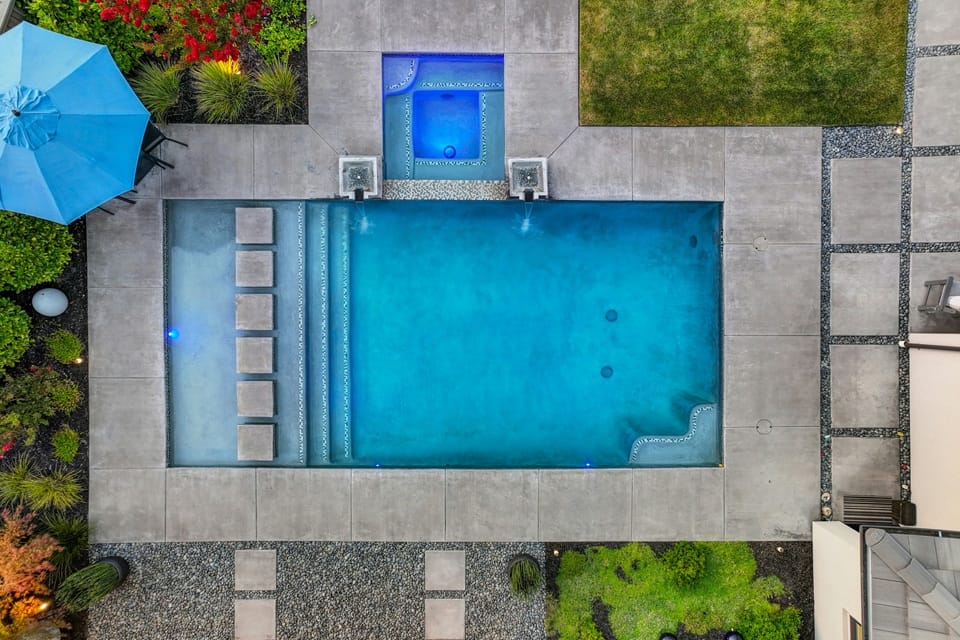
The house is finished. Every room connects with purpose. Materials, levels, and sightlines feel deliberate. Yet step outside and something feels unresolved. The outdoor space doesn’t quite carry the same architectural confidence.
This is where experienced luxury pool builders make the difference. A pool at this level is not a backyard addition. It is an architectural element. It extends the structure, proportions, and material language of the home into the landscape.
When done properly, the water does not feel installed. It feels inevitable.
What Separates Luxury Pool Construction from Standard Builds
The distinction begins with process.
Standard pool builds often start with a template: choose a shape, adjust dimensions, apply finishes. Architectural pool projects work in reverse. The builder studies the home first.
Floor levels inside the home are aligned precisely with finished water levels outside. Rooflines influence coping edges. The position of glazing determines how the pool is framed from living spaces. Reflections are considered. So is how the pool reads from the street.
These decisions are not aesthetic preferences. They are structural calculations verified against architectural drawings before excavation begins.
Material selection follows the same discipline. Stone coping is sourced to match or complement existing exterior finishes. Expansion joints are concealed. Drainage channels are recessed or integrated into edge details so they do not interrupt clean lines.
Even the way the pool meets surrounding paving is resolved early to avoid awkward transitions later.
True luxury pool builders treat the pool as part of the architectural envelope, not a decorative feature.
Reading the Site Before Designing the Pool
Luxury projects respond to land as carefully as they respond to architecture.
Slope determines whether the pool is set into the landscape or elevated. A steep block may justify a suspended structure or negative-edge design, but only if drainage and engineering allow it.
Soil conditions influence footing depth and reinforcement. Reactive clay, sandy profiles, or rock shelves require different structural approaches. Council setbacks and easements restrict positioning.
Experienced builders evaluate these constraints before committing to form.
Sun movement is another critical factor. A shallow lounging zone positioned in permanent shade will rarely be used. A spa facing prevailing wind becomes uncomfortable in winter. Bench placement and entry steps are shaped by how the space functions throughout the day.
A well-executed architectural pool appears effortless. Behind that simplicity is rigorous planning.
Features that Define Architectural Luxury
Luxury does not mean adding every available feature. It means selecting features that support the design language of the home.
Common inclusions may involve:
- Infinity or negative edges where the site and view justify a catch basin
- Integrated spas that align with finished floor levels
- Baja shelves positioned for both visual balance and practical use
- Built-in bench seating formed within the structural shell
- Concealed skimmers and flush grates
- Underwater lighting that defines volume without glare
- Subtle water features that complement rather than dominate
The difference lies in restraint.
An infinity edge on a flat suburban block without a view may feel forced. A sheer descent against minimalist architecture can disrupt visual calm.
Luxury pool builders understand that restraint often delivers stronger design outcomes than excess.
Engineering and Execution Matter As Much As Design
An architectural pool demands coordination across multiple trades.
Excavation must align precisely with structural engineering. Steel fixing is inspected before concrete placement. Waterproofing integrity becomes critical, especially in suspended or elevated designs.
Hydraulics are calculated based on pool volume and feature load. Circulation systems must be concealed without compromising access for servicing. Equipment positioning affects acoustic performance and energy efficiency.
These technical considerations rarely appear in photos. Yet they determine how the pool performs five, ten, or twenty years later.
Luxury construction does not rely on visual appeal alone. It relies on disciplined engineering beneath the surface.
From Vision to Buildable Reality
The transition from architectural drawing to constructed pool is where many projects falter.
Luxury pool builders begin by reviewing full architectural documentation, not just backyard plans. They assess structural loads, boundary clearances, and site access before design confirmation.
Tight sites may require staged equipment delivery. Retaining walls might double as architectural seating. Service trenches are planned early to avoid cutting finished paving later.
By resolving these issues upfront, the finished pool does not show signs of compromise.
The result feels intentional because it was resolved early.
Choosing the Right Luxury Pool Builder
If you are selecting a builder for an architectural project, the conversation should begin with your home, not the pool.
A qualified builder will ask about:
- Floor heights and finished levels
- Architectural materials and colour palette
- Sightlines from interior spaces
- Landscape integration
- Structural engineering requirements
They will speak about tolerances, hydraulic planning, and construction sequencing, not simply shapes and tiles.
Coordination is another marker of experience. Architectural projects demand consistent oversight, trade scheduling, and quality control. The builder should manage these relationships directly rather than delegating responsibility without supervision.
When evaluating luxury pool builders, review completed projects that demonstrate integration with architecture, not just impressive standalone pools.
Creating A Pool that Belongs
An architectural home deserves an outdoor space that reflects the same level of design discipline.
The right pool does not compete with the house. It extends it. It reinforces lines, proportions, and materials already established.
When structure, engineering, and design align, the pool becomes part of the home’s identity rather than an addition.
That is the difference between a well-built pool and one that genuinely elevates the property.
If you are planning an architectural outdoor space, experienced luxury pool builders can translate your vision into a design that feels considered, cohesive, and built to perform long after construction is complete.