
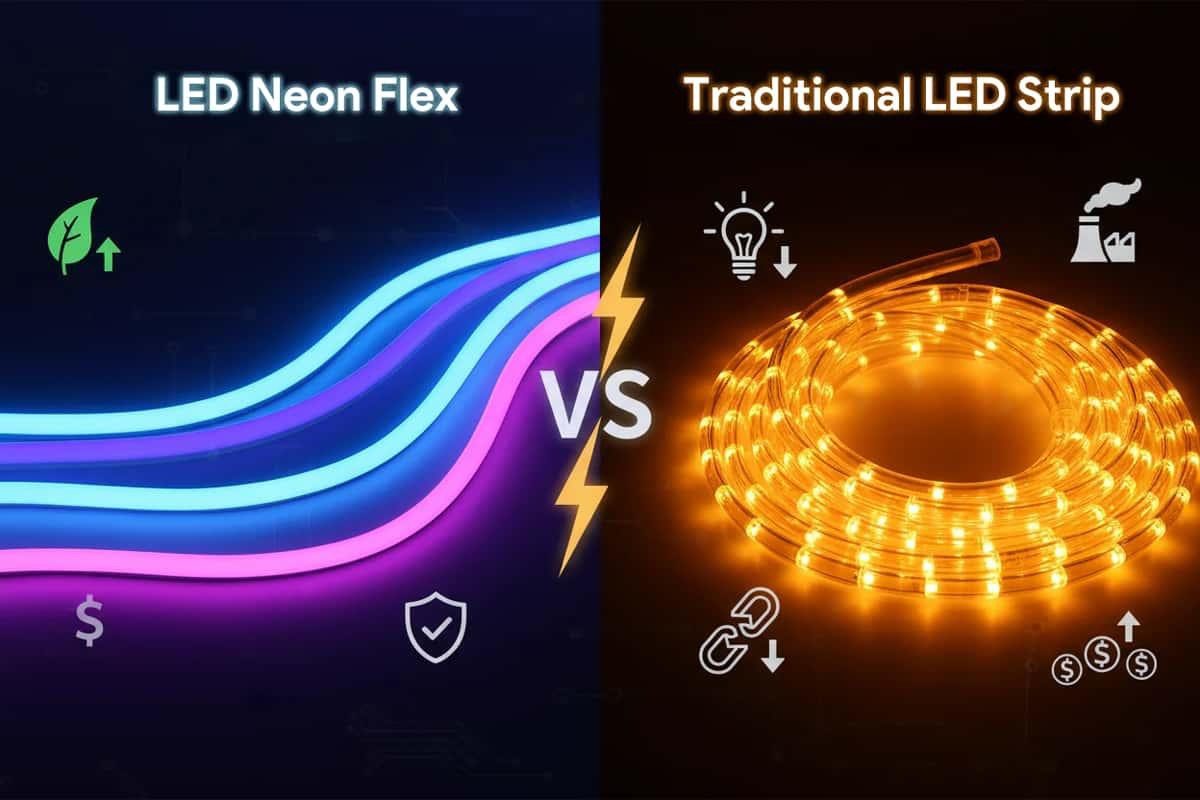
Outdoor lighting in 2026 is no longer just about visibility. Today’s homeowners and architects use lighting to create mood, improve curb appeal, and enhance architectural beauty. Two of the most popular solutions dominating exterior lighting design are traditional LED strips and Waterproof LED Neon Flex systems.
Both technologies are considered among the best LED lights for outside, but they serve very different design purposes. Understanding their differences helps homeowners and designers select the right solution for patios, pathways, rooflines, gardens, and modern architectural spaces.
Understanding the Difference Between Neon Flex and LED Strips
The biggest difference between traditional LED strips and neon flex lies in how the light is distributed.
Traditional LED Strips – Focused and Precise
Traditional LED strips contain multiple small LED chips mounted onto a flexible circuit board. These LEDs create a bright and efficient lighting solution commonly used for indirect lighting applications.
Without a diffuser, LED strips often create visible “light dots,” sometimes called the “string of pearls” effect. Because of this, they work best when hidden inside aluminum channels, ceilings, stairs, or architectural grooves.
Traditional strips are ideal for:
- Cove lighting
- Under-step illumination
- Cabinet lighting
- Surface washing
- Hidden ambient lighting
Waterproof LED Neon Flex – Smooth and Continuous
Unlike standard strips, neon flex uses a silicone or PVC outer body that evenly diffuses light. This creates a seamless glow with no visible LED dots.
The smooth appearance makes neon flex perfect for:
- Roofline outlining
- Landscape borders
- Outdoor signage
- Poolside accents
- Architectural edge lighting
Its soft illumination provides a premium modern appearance that is highly popular in luxury outdoor spaces.
Why Waterproof LED Neon Flex Is Trending in 2026
Modern architecture increasingly favors continuous lighting lines that create futuristic aesthetics. This trend has accelerated the popularity of waterproof neon flex systems.
Superior Weather Resistance
High-grade silicone neon flex products are designed to survive harsh outdoor environments including:
- Heavy rain
- Extreme UV exposure
- Snow and freezing temperatures
- High summer heat
Premium silicone materials resist yellowing and cracking, making them more durable than older PVC-based lighting systems.
Flexible Design Possibilities
One of the biggest advantages of neon flex is its bending capability.
Options include:
- Top-bend neon flex
- Side-bend neon flex
- 360-degree round neon lighting
These variations allow designers to illuminate curves, pathways, arches, and creative architectural shapes with ease.
Traditional LED Strips Still Dominate Hidden Lighting Designs
Although neon flex is visually striking, traditional LED strips remain essential in modern outdoor lighting design.
Their slim profile makes them excellent for hidden applications where the lighting source should remain invisible while softly illuminating surrounding surfaces.
Designers commonly use traditional strips for:
- Floating staircases
- Deck lighting
- Under-rail illumination
- Stone wall grazing
- Minimalist luxury homes
When combined with aluminum channels and diffusers, traditional strips create elegant and professional-looking lighting systems.
Installation Comparison – Which Is Easier?
LED Strip Installation
Traditional LED strips often require:
- Aluminum extrusion channels
- Diffuser covers
- Mounting tracks
- Waterproof protection
This creates a cleaner finish but can increase installation complexity.
Neon Flex Installation
Neon flex is typically easier to install because the protective housing and diffuser are already integrated into the product.
Benefits include:
- Faster installation
- Fewer accessories required
- Better visual appearance when turned off
- Easier integration into visible architectural designs
Outdoor Lighting Trends Defining 2026
Cyber-Residential Design
Modern luxury homes are embracing futuristic “Cyber-Residential” aesthetics using bright linear lighting around rooflines and outdoor structures.
This trend heavily favors neon flex because of its continuous light output and modern visual appeal.
Organic Minimalism
On the opposite end, minimalist luxury homes continue using hidden LED strip systems to create subtle and calming lighting environments.
This style focuses on indirect illumination where the fixture remains invisible.
Technical Comparison Table
| Feature | Traditional LED Strips | Waterproof LED Neon Flex |
| Light Appearance | Visible LED dots | Continuous smooth glow |
| Diffusion | Requires diffuser | Built-in diffusion |
| UV Resistance | Medium | High |
| Flexibility | Limited bending | Multiple bending options |
| Installation | More accessories needed | Easier installation |
| Best Use | Hidden lighting | Visible architectural lighting |
| Outdoor Durability | Good | Excellent |
Which Outdoor Lighting Option Should You Choose?
Choose traditional LED strips if you want:
- Hidden lighting effects
- Soft ambient illumination
- Minimalist luxury aesthetics
- Architectural wall washing
Choose neon flex if you want:
- Bold modern lighting
- Visible design accents
- Curved lighting installations
- Outdoor decorative statements
Many luxury outdoor projects now combine both technologies to achieve layered architectural lighting effects.
Final Verdict
Choosing between neon flex and traditional LED strips ultimately depends on your design vision, installation goals, and architectural style.
Traditional LED strips remain the best choice for subtle and hidden lighting effects, while Waterproof LED Neon Flex delivers dramatic visual impact and modern outdoor aesthetics.
For the best results in 2026, many experts recommend combining both systems to create layered outdoor lighting designs that enhance beauty, functionality, and long-term durability.
About The Author

 businessnewstips